Stop Fixing India's Exams
NEET leaked, CBSE's new marking system melted down, and 23.6% of young Indian graduates are jobless. We keep debugging an exam machine we should replace.

I did not take NEET. I did sit for CBSE Class 12 boards, and I did sit for JEE, badly. A few thousand ranks behind the cutoff, if I remember right. Then I sat for NID-DAT and got an All India Rank of 33.
That gap still confuses me. The same person, measured twice within a year, came out useless once and promising once. The difference wasn’t me. It was what each test was actually built to measure.
Years later, hiring people who came through the same pipeline, I keep noticing the same thing: the signal is getting weaker while the noise gets louder.
Then May 2026 delivered a double failure. NEET-UG was cancelled after a “guess paper” matched the real exam, and CBSE’s new On-Screen Marking system produced blurred scans and broken portals. I didn’t see two separate scandals. I saw the same machine failing in two different places.
Key Takeaways
- NEET-UG 2026 reached 2M+ aspirants, then was cancelled in nine days after a 410-question leak (SCC Online).
- 23.6% of young graduates are jobless, double the overall rate (NCAER).
- High-stakes exams exist to sort scarcity, not to measure learning, so they can’t be patched into honesty.
- A signed, continuous competency profile makes a single leaked paper worthless.
What broke the exam machine this month?
NEET-UG reached over two million aspirants on May 3, 2026, then was cancelled by May 12 after investigators found a 410-question “guess paper,” with around 120 chemistry questions reportedly matching the real exam (SCC Online).
The CBI has made arrests in the alleged leak network. The Supreme Court told the NTA it still hadn’t learnt its lesson, which is a polite way of saying this is a sequel.
The very next day, CBSE declared Class 12 results using a shiny new “On-Screen Marking” system. Students seeking scanned copies found blurred pages, half-evaluated answers, portals crashing under load, and physics marks that made no sense. The contract went to a small Hyderabad vendor that underbid TCS, about 66 days before the nationwide rollout. Teachers who tested it said it needed another year or two. It got zero. Over four lakh students have since applied to see their own scanned answer sheets.
One exam got cheated. The other got “modernized.” Both broke.
And the response, predictably, is a queue of fixes. Tighter security. Biometric verification. Computer-based testing. Better vendors. More audits. A new committee. Every single fix quietly assumes the same thing:
That the exam is worth saving.
I don’t think it is.
What are we actually patching?
India runs one of the world’s most concentrated high-stakes testing systems: a single NEET-UG cycle drew more than two million aspirants in 2026 for a few tens of thousands of medical seats (SCC Online). Strip away the outrage cycle and the machine itself is simple.
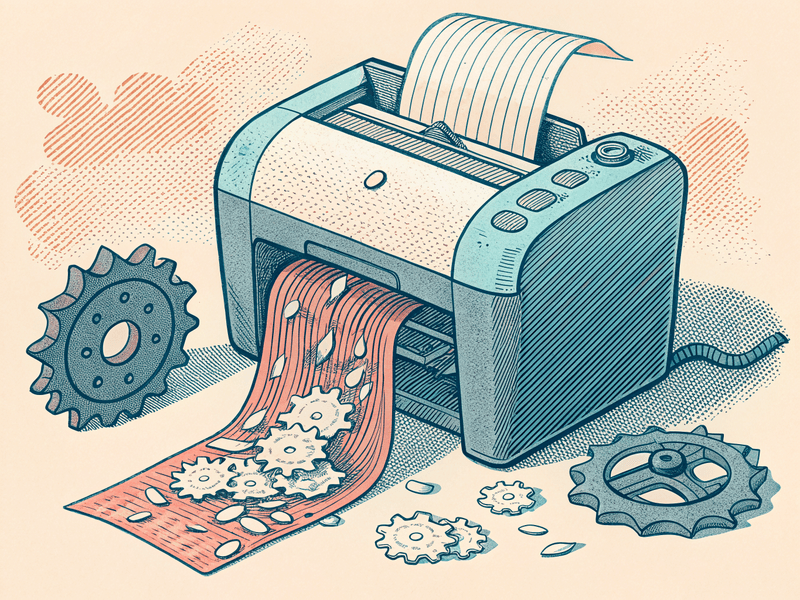
We keep taping over the same machine and calling it a fix.
A decade of a kid’s life narrows down to a handful of scores on a handful of mornings. Those scores decide medicine or engineering or “general degree, figure it out later.” The stakes for jobs, status, and family honour all load onto a single number.
When you concentrate that much value into one test, the incentives become automatic. A student who actually understands physics can still lose to one who has memorized the last ten years’ question patterns. A leaked paper is worth a fortune, not because students are bad people, but because one morning has become the entire game. A blurry scan or a crashed portal doesn’t cost you a few marks. It can cost you the year.
This is the part nobody says out loud: NEET wasn’t cheated despite being a serious exam. It was cheated because it is the kind of exam where cheating pays for itself. The leak isn’t the disease. It’s the most honest symptom we have.
We are cramming for a future that is already gone
Here’s what should scare every parent: in India, a degree has become a liability. The system grinds kids toward a shrinking set of “safe” careers.
Doctor. Engineer. IT job. Government post. That destination is being quietly demolished while we argue about the entrance ticket.
Look at the numbers:
- Roughly two in three unemployed young adults are graduates (State of Working India 2026, Azim Premji University). Not dropouts. Graduates.
- The graduate unemployment rate is 23.6%, more than twice the rate for this age group overall. For engineering grads specifically, it’s about 25% (NCAER).
- In most countries a degree is a shield against joblessness. In India it does the opposite.
A degree is supposed to lower your odds of being jobless. In India it raises them.
Graduates are jobless at more than twice the overall youth rate. And it compounds: roughly two in three unemployed young Indians hold a degree — not dropouts, graduates.
And now stack AI on top. The IT and back-office economy, the ladder millions of families climbed into the middle class, is exactly the layer generative AI hits first: routine code, support, testing, data processing. IT majors have slowed hiring and shrunk net additions as automation spreads. Early research also suggests entry-level hiring in AI-exposed fields has softened since the LLM wave hit (GlobalSouth.AI analysis).
So here’s the actual situation. We put a sixteen-year-old through two years of grinding hell, in a system riddled with leaks and run on software that can’t render a scanned page, for a shot at a “safe” career. And the safe careers are the ones being automated fastest.
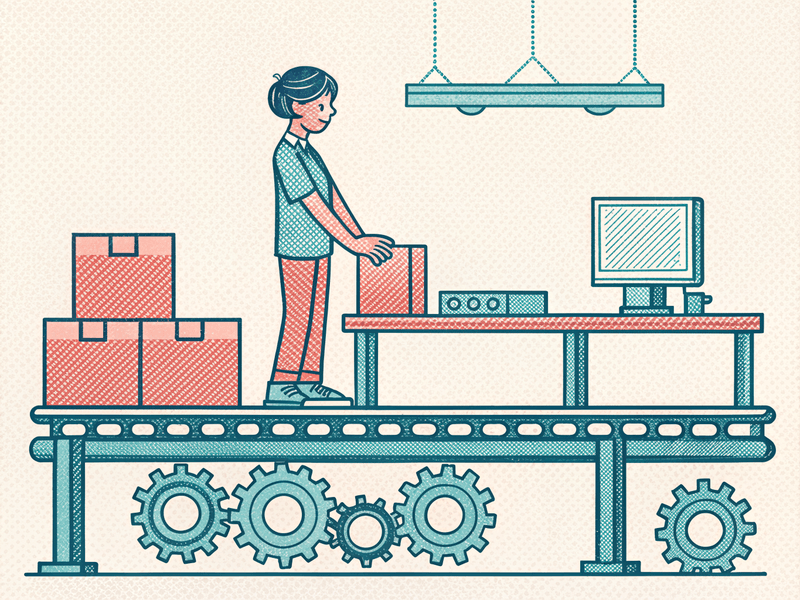
The pipeline points at a safe career just as the safe work starts getting automated.
We built a brutal, riggable lottery for tickets to a destination that’s being knocked down.
That’s the system everyone is so eager to “fix.”
Why do we test like this?
Be fair to the system for a second. It does one job ruthlessly well: it sorts scarcity. Two million aspirants, a few tens of thousands of MBBS seats: you need a clean, defensible way to rank a crowd that size and hand out limited tickets.
That’s the real function. Not learning. Sorting.
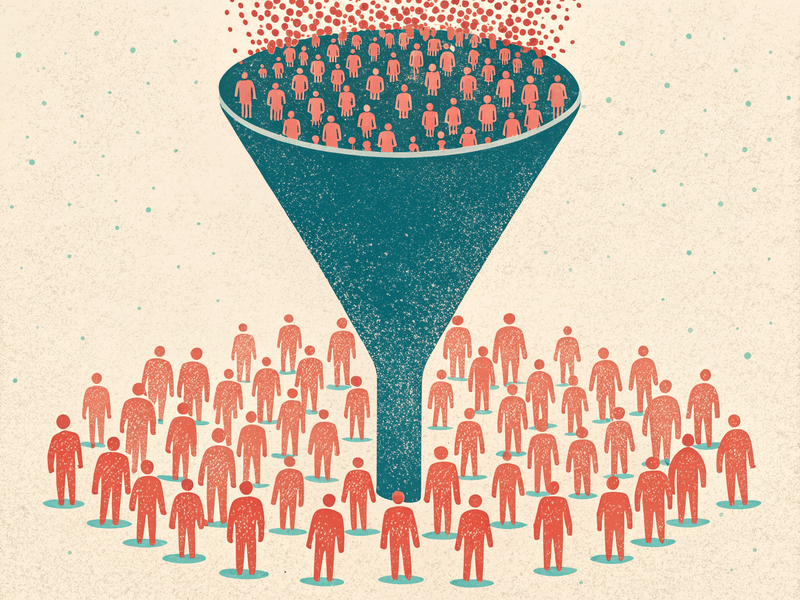
Two million in at the top. A narrow band out the bottom. The rest is exhaust.
Once you see it as a sorting machine, everything makes sense, including why it can’t be patched into honesty. The cheating, the cramming, and the catastrophic fragility all flow from concentrating life-or-death stakes into one rankable number. You can biometric-scan the room and encrypt the question bank all you like. As long as one paper decides everything, somebody will pay to get that paper. You’re not fixing a bug. You’re fighting the design.
What would I build instead?
Start from a different measurement. The one principle I’d build on: stop measuring time served and start measuring what someone can actually do.
I’m not a policymaker. I’m a developer who has built recommendation systems and seen how quickly they can go wrong. But if I were asked to sketch an alternative, everything else falls out of that one move.

Stop measuring time served. Start measuring what someone can actually do.
1. A public skill graph instead of a single syllabus. Replace “the Class 12 syllabus” with an open, national map of competencies: literacy, numeracy, computational thinking, trades, arts, communication, and how they connect. Not one ladder everyone climbs in lockstep. A graph everyone navigates differently. Think of it as open infrastructure, like UPI for skills: a public standard anyone can build on.
One route, same rungs, same order for everyone. Miss a rung and you fall the whole way down.
2. An adaptive layer that figures out where you are and what’s next. This is where AI actually earns its place, not as an exam invigilator, but as a tutor that never sleeps. It reads what you’ve done, infers what you know, and recommends the next problem, project, or person to learn from. We already build recommendation engines that are scarily good at suggesting the next video. Why not point that same machinery at learning instead of attention span?
Flip any result and the engine re-routes: more practice where you slipped, a stretch where you are ready. The same recommendation machinery that picks your next video, pointed at learning.
3. A portable, signed “learning ledger” instead of a marksheet. Every real thing you do gets logged as verifiable evidence: a project, a solved problem, a peer review, a mentor sign-off. It’s cryptographically signed and owned by you. A git history of what you can do, that an employer or university can actually inspect. Not a rank on a curve. A profile with receipts.
One number, and your place on a curve. It says nothing about what you can actually do.
4. Assessment as a stream, not a one-shot. Instead of one high-stakes morning, you get hundreds of tiny, continuous signals embedded in actual work. And here’s the quiet superpower: when no single test decides anything, leaking a single test buys you nothing. You can’t cram a portfolio of two years of real output the night before. The incentive to cheat doesn’t get policed away. It evaporates.
Leak that one paper and you compromise 100% of the result. It is worth a fortune.
Leak one of two hundred signals and you compromise 0.5%. Nobody bothers.
Spread the signal across hundreds of small, continuous tasks and the incentive to cheat does not get policed away — it evaporates.
Here’s the whole thing side by side:
Notice what the right column does to this month’s headlines. A NEET-style leak stops being an apocalypse, because there’s no single paper to leak. A CBSE-style marking meltdown stops being possible, because there’s no one-shot script to mis-scan. You don’t make the exam more secure. You make the exam unnecessary.
And it maps better onto the AI-shaped job market too. A continuous, evidence-rich profile of what you can do across domains is exactly what a volatile labour market can read, far better than “94.2%, Science stream.”
And it travels. A signed, machine-readable profile is something a foreign university or an employer abroad can actually read, without you re-proving yourself through one more standardized gauntlet (SAT, GRE, IELTS, and the rest) for every border you want to cross. The one thing Indians grind hardest for, a way out and up, gets easier, not harder.
Where could this go wrong?
The prettier the diagram, the more I distrust it, and I’ve shipped enough products to know how this breaks. The CBSE OSM rollout already showed the pattern: bolt half-baked tech onto a high-stakes process and you don’t remove human error, you industrialize it (The Week). So here’s how a competency system breaks if you build it badly.
The digital divide eats it alive. A kid in a metro with fibre internet and three tutors will lap a kid on a shared phone with patchy data. Build this as a premium app and you don’t dissolve inequality. You encode it, permanently, in the infrastructure. This has to be publicly funded, open-source, and offline-first from day one, or don’t bother.
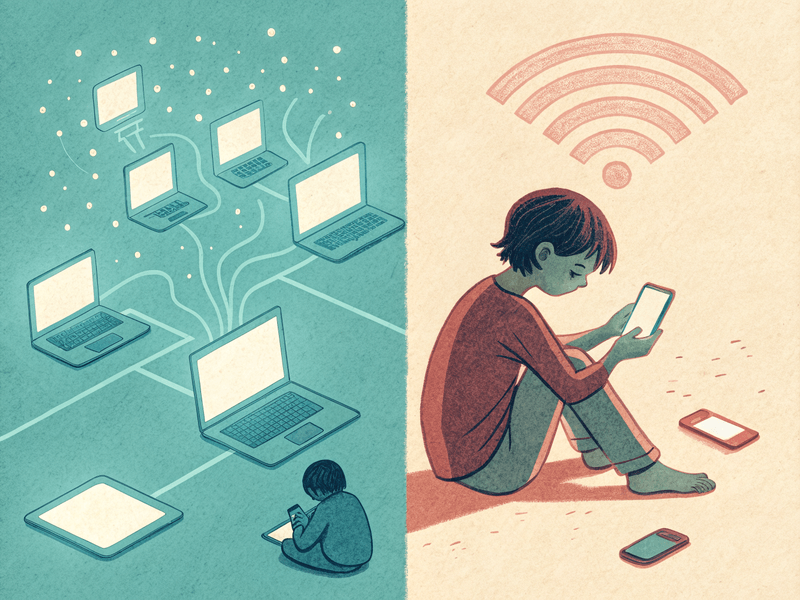
Same promise, two children, and the network quietly decides which one it reaches.
Surveillance. A system that watches every keystroke to “personalize learning” is also a data goldmine and a privacy disaster waiting to happen. Continuous assessment means continuous data collection on minors. That demands hard, legislated limits: data minimization, no secondary use, kids owning their own ledger. Not a privacy policy nobody reads.
Algorithmic bias. Auto-scoring trained on Indian data inherits Indian biases: caste, language, region, gender. An AI that quietly marks down a dialect or a name is worse than a human examiner, because it does it at national scale and calls it objective. This needs independent audits, not blind trust.
Teachers don’t get cheaper. They get more important. The failure mode here is a policymaker reading “AI tutor” as “fire the teachers.” Wrong. The machine handles drilling and tracking. Humans handle the part that matters: mentoring, judgment, ethics, the messy social stuff a model can’t hold. Staffing is the investment, not the cost to cut.
I’m not pretending these are small. I’m saying they’re design problems: hard, solvable, and worth solving. The exam system’s problems are structural. You don’t solve those without changing the structure.
“But you cannot flip the whole country overnight”
Correct. You don’t. You run both systems in parallel for a decade.
Competency profiles ship alongside the old marksheet. You pilot the new system in real districts and measure it honestly. You give employers and colleges time to start trusting the profile. The moment they trust it more than the rank, the rank quietly dies on its own. No big bang. Boring, phased, multi-year. That’s how you migrate a system a billion people depend on.
The hard part was never the technology. We have adaptive learning, signed credentials, and AI tutors today. The hard part is political will and an entire test-prep industry whose business model is the disease.
Cancel the format
We spent this month treating a leak and a software meltdown as two separate scandals to be patched. They aren’t. Two million aspirants, one cancelled exam, and a marking system that couldn’t render a page are the same machine showing us its wiring under stress: a machine that turns learning into a riggable, fragile, all-or-nothing sort, and aims it at a future that’s disappearing.
We cancelled NEET this month.
We should have cancelled the format.
Frequently asked questions
Why was NEET-UG 2026 cancelled? NEET-UG reached more than two million aspirants on May 3, 2026, and was scrapped by May 12 after investigators found a 410-question “guess paper,” with roughly 120 chemistry questions reportedly matching the real exam. The CBI has made arrests in the alleged leak network (SCC Online).
What went wrong with CBSE’s On-Screen Marking system? CBSE handed its new On-Screen Marking system to a vendor that underbid TCS roughly 66 days before launch. Students hit blurred scans, half-evaluated sheets, and crashing portals; over four lakh have since applied to see their own answer sheets (Deccan Herald).
Is a degree still worth it in India? The data is brutal: 23.6% of young graduates are unemployed, more than double the overall rate, and about 25% for engineering grads (NCAER). Two in three jobless young adults hold degrees (State of Working India 2026). A degree has shifted from shield to liability.
What should replace high-stakes exams? A public skill graph, an adaptive AI tutor, a portable signed “learning ledger,” and continuous assessment instead of one-shot tests. When no single exam decides everything, leaking one paper buys nothing, and a signed competency profile reads better in an AI-shaped job market than “94.2%, Science stream.”
Can India switch overnight? No, and it shouldn’t try. Run both systems in parallel for a decade: competency profiles ship alongside the marksheet, piloted in real districts and measured honestly. When employers trust the profile more than the rank, the rank quietly dies on its own.
Sources and further reading: NEET-UG 2026 timeline (SCC Online) · CBSE On-Screen Marking controversy (The Week) · State of Working India 2026 · Graduate unemployment breakdown (NCAER)
What’s next?
This is part of a series on why India’s government software keeps falling over, and how I’d build it so it doesn’t:
- Stop Fixing India’s Exams (you are here) — why you can’t patch a high-stakes exam into honesty, and the continuous competency profile that replaces it
- BTS of CBSE’s Infra Meltdown — why the result-day “cyberattack” was almost certainly just demand, and why the portal was built to fall over
- How I’d Actually Build Government Software That Doesn’t Fall Over — a federated core, HTML-first frontends, and storage you can’t make public
- GitHub for Government Work — trading the multi-year, single-vendor RFP for an open commons paid per merged pull request
- Assume the Endpoint Is Hostile — locking down the lakhs of devices that reach the core, with a closed system on open foundations
One machine, five layers: the exam, the meltdown, the architecture, the procurement, and the endpoint.